
Checking for a Warrant in Cascade
Cascade posts no city warrant roster and runs no municipal-court portal, so start with the paper trail. The Cascade Police Department page is the local agency route, while a filed case belongs to the clerk of the county printed on the citation. No web search can substitute for that venue check.
- Read the citation or notice for its county and case number.
- Call Cascade Police at 563-852-3100 for city-agency routing.
- For a Dubuque County missed date, call the Clerk at 563-589-4418.
- Search Iowa Courts Online using the correct county and case type.
- Confirm live status and the required response with the issuing office.
A blank result is not a clearance. The Cascade citation may be too new, the name may be spelled differently, or the matter may still be confidential, so a clean search settles nothing on its own.
Cascade Warrants Cross a County Line
The police department's own description puts Cascade in both Dubuque and Jones Counties, and that line matters more than the city name. Searching Dubuque County online will not surface a case filed in Jones County, and the Dubuque County Clerk cannot resolve a Jones County docket. Where the arrest happened or where a person lives does not fix the venue either. The county field on the paperwork is the detail that routes a Cascade warrant check correctly.
Those staffing figures describe the Cascade city police service, not a dedicated warrant unit. They also show why routing among Cascade Police and both county sheriffs sits at the heart of a sound warrant check.
Cascade Police and Municipal Court
Iowa's unified District Court long ago absorbed the old municipal and justice-of-the-peace courts. Cascade Police can investigate, cite, arrest, and serve process, but no separate Cascade Municipal Court warrant database exists. Traffic, simple-misdemeanor, municipal-infraction, and criminal filings all run through District Court magistrate functions in the proper county.
Cascade Police Department
320 1st Avenue West, Cascade, IA 52033
Office 563-852-3100
Department cell 563-599-8051
Dubuque County case route
Clerk of Court 563-589-4418
Sheriff dispatch 563-589-4414
Jones County papers stay with that county's clerk and serving agency. Cascade City Hall staff do not serve as the court clerk.
Cascade Police and Sheriff Coordination
Cascade Police works with both county sheriffs, but that cooperation does not mean all three offices hold the same public warrant record. City police make the practical first contact for a local police interaction, a service question, or a possible new charge. For a missed setting and public docket status, the issuing clerk comes first. A Cascade warrant check works best when each office is used for its own role.
| Question | Best route |
|---|---|
| Which agency handled the event? | Cascade Police |
| What followed a Dubuque missed date? | Dubuque County Clerk |
| Was it filed in Jones County? | Jones County clerk |
| Is a new-charge warrant suspected? | Police or counsel |
On a new Dubuque County charge, official county guidance says warrant support information stays confidential until an arrest or initial appearance. A silent public file in Cascade can still hide active process.
Cascade Warrant Types
Labels matter because each type of process carries different access rules. Iowa sources use arrest warrant, failure-to-appear warrant, and bench warrant language. They do not back calling a Cascade fine matter a capias pro fine, so skip that term.
| Type | Cause | Route |
|---|---|---|
| Failure to appear | Willful missed citation appearance | Correct county clerk |
| Bench warrant | Missed setting or court duty | Filed docket and court |
| Arrest warrant | Probable-cause complaint | Police or counsel if confidential |
| Search warrant | Search for evidence | Not a personal lookup |
| Juvenile process | Juvenile proceeding | Generally confidential |
A Cascade citation is not itself a warrant. Iowa Code §805.5 does allow one after a willful failure to appear as required, though.
Cascade City Hall Is Not the Warrant Court
The official Cascade City Hall page lists 320 1st Avenue West, open weekdays from 8:30 a.m. to 4:30 p.m. Administrative offices, police, council chambers, and a gymnasium share the building. No court counter sits inside.
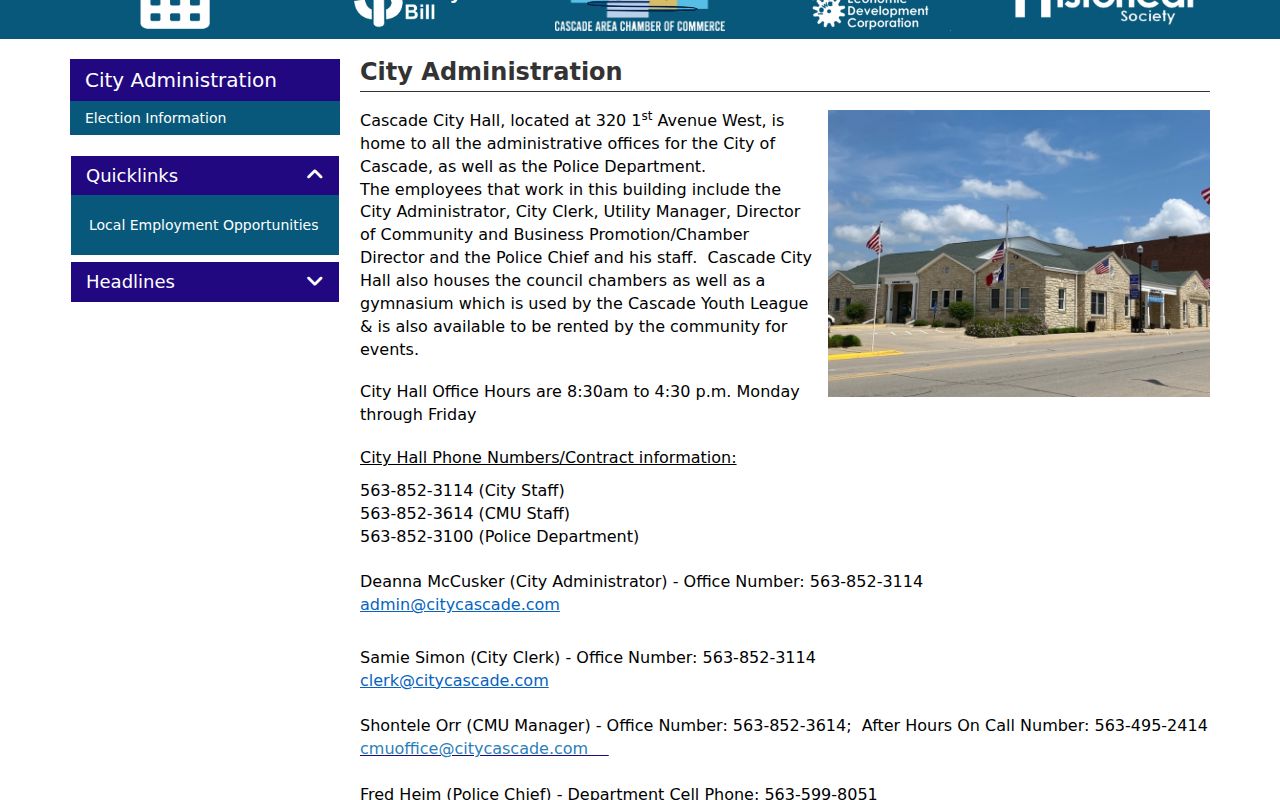
That page identifies the Cascade contact point only. No official source calls it a courthouse warrant counter, bond window, or surrender site, so call before you go. The county clerk on the case answers judicial status, and city staff cannot promise that a payment recalls a warrant.
Inside a Cascade Warrant Record
Iowa Courts Online is a docket index, not a live warrant list. A public Cascade case supplies identifiers for a precise clerk question. It may still lack any universal active-warrant field.
| Case ID | A 17-character Iowa identifier such as 01311 FECR 000000; confirm the exact docket value. |
|---|---|
| County and type | Identify venue and the filing category, vital in Cascade. |
| Name and DOB | Help separate similar parties under portal search limits. |
| Charge and count | Describe allegations, not guilt. |
| Docket event | May show issuance, hearing, return, or recall. |
| Bond and service | Can show amount, type, posting, and return when public. |
Ask the clerk whether Cascade process is still active, was served, or was withdrawn, and keep the case number ready.
No Cascade Warrant Portal Found
City materials offer no full roster, no name-search form, no bond channel, no recall form, and no warrant-only counter for Cascade. Filling that gap with the county Most Wanted page or a commercial people-search service is a mistake, because the Most Wanted program is curated rather than comprehensive.
Missing online is not cleared. The wrong county, a recent filing, restricted material, a spelling difference, or a pre-docket law-enforcement process can all yield no result.
For a public filed case, open Iowa Courts Online and choose Trial Court, then Case Search. Type at least two letters of a last name and narrow by first name, exact date of birth, county, case type, citation, or full Case ID. A fresh Cascade citation may need ten to fourteen days, or longer, to show up. Patience pays here.
How Cascade Warrants Fit the County System
A Cascade police contact can drop a case into either county's District Court system. On the Dubuque side, the path runs from Cascade Police to the Iowa District Court, Dubuque County Clerk, and a sheriff or peace officer serving the process. Iowa keeps no single public statewide warrant roster. Law-enforcement databases are not public self-search tools either.
Warrant flow: Cascade Police › correct county District Court and Clerk › sheriff or serving officer
For the wider route, turn to Dubuque County warrant records. The issuing venue controls the record, the required appearance, the bond, and any order that recalls a warrant.
Confirming a Cascade Warrant Venue
Before you run any Cascade warrant search, grab the paperwork and circle four things: the county, the court, the case type, and the case or citation number. Details sometimes conflict. When they do, ask Cascade Police which agency handled the event, then ask that county clerk about the docket. The mailing address or the city police name alone never proves venue. Venue also decides how to read whatever an online warrant lookup returns. A Dubuque County result speaks only for the filing it shows. It cannot confirm that Jones County has no related matter, and a Jones County entry says nothing about every action Cascade Police may have taken. So ask pointed questions. Where was the charge filed? Which judicial officer issued process, which agency serves it, and what event is due next? Keeping the police report separate from the court record is the whole point, because mixing the two sends a Cascade warrant check down the wrong path.
- Match the county printed on the document.
- Search that county online.
- Record the Case ID and latest public event.
- Ask that clerk what action is due.
- Contact counsel or police about a confidential new charge.
Settling a fine is not the same as recall in Cascade. Ask the clerk to confirm the warrant's status in writing. Keep every receipt and every court order. Clearing the warrant does not end the underlying case. If Cascade court staff confirm an active warrant, ask what comes next: an appearance, a bond, a motion, payment, or voluntary surrender. Clerks explain procedure, but they cannot give legal advice. Cascade posts no recall form and no surrender schedule. Hand your lawyer the full case number and both possible counties so the right issuing court can be verified, then check the docket again and request written confirmation.
Cascade Warrant Records and Public Access
Getting Cascade warrant records depends on the type of case and its stage. Chapter 22 opens most public records to inspection, though other laws keep certain warrant and juvenile material sealed.
Key rules:
Iowa Code Chapter 22 permits inspection subject to lawful confidentiality and reasonable-cost procedures.
Iowa Code §804.29 seals arrest-warrant support until arrest and return or initial appearance, absent a court order.
Iowa Code §232.147 generally protects juvenile court records.
A Cascade records request should name the agency, date, case, and nonconfidential record sought. Chapter 22 cannot force the release of sealed warrant information.
Cascade Police Contacts in Context
The official Cascade Police information displays office and cell contacts along with regional coordination.
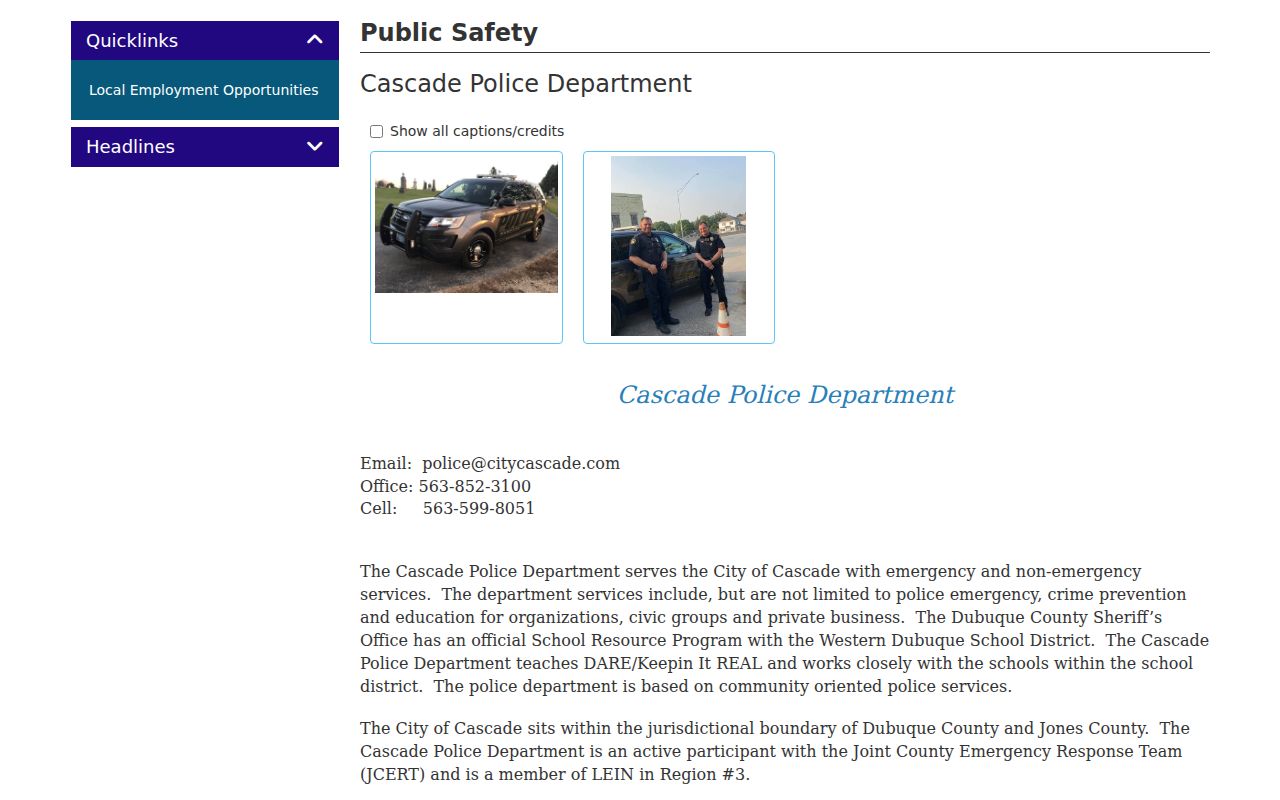
Use the office line for routine questions. Call emergency services only for a true emergency. Court status belongs with the correct county clerk. Cascade official pages list two police email addresses, so phone ahead to confirm the current one before sending anything sensitive. No official source quotes a Cascade warrant-search fee, recall fee, fixed bond, surrender appointment, or amnesty day. The issuing court or agency supplies those case-specific terms.
Cascade Warrant Search Follow-Through
Log every call and every court action. Record the office, the date, the Case ID, and the answer given. Ask whether that answer reflects the docket, a police report, or present service status, because each source updates on its own schedule. A Cascade courthouse terminal may hold public documents beyond the basic online index. If material stays sealed, Chapter 22 cannot override that bar. Until the lawful access point opens, counsel or the responsible agency remains the sound route.